Claude Fable 5 & Mythos 5: Redefining Autonomous AI Agents
Discover how Claude Fable 5 pushes the boundaries of agentic coding, the cost of zero-defect execution, and what it means for B2B automation.
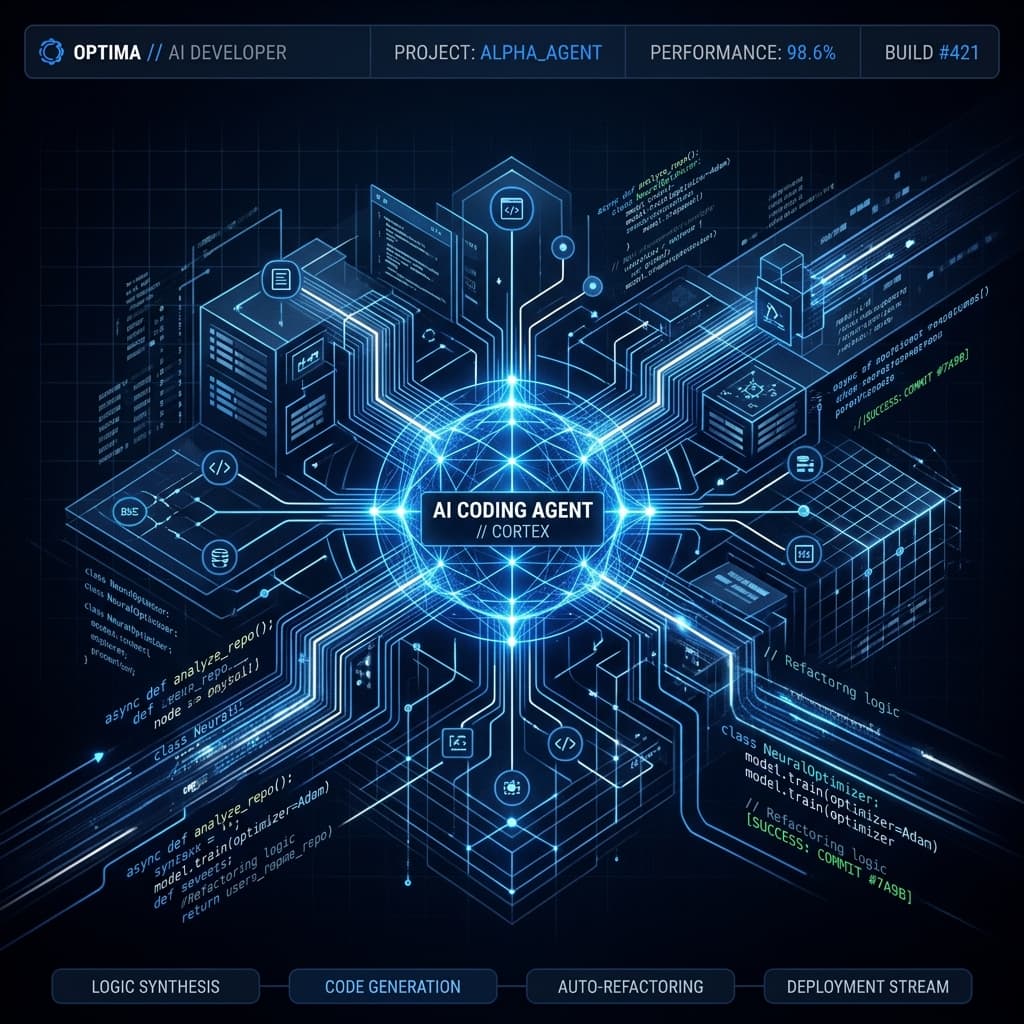
The release of Claude Fable 5 marks a significant shift in the landscape of artificial intelligence. Positioned as the most capable model for demanding reasoning and long-horizon agentic work, it represents a leap forward from previous iterations like Opus 4.8.
But with this power comes a steep cost and an uncompromising set of safety guardrails. Here is an in-depth analysis of what makes the "Mythos Class" models unique and how they are setting a new standard for autonomous software engineering.
The Mythos Class: Fable 5 vs. Mythos 5
Anthropic launched two variants of its new flagship model: Claude Fable 5 and Claude Mythos 5.
At their core, both models share the exact same underlying architecture and capabilities. The key difference lies in their constraints:
- Claude Fable 5 is the general-availability model. It features strict safety classifiers that prevent it from assisting in specific high-risk domains (like cybersecurity, biology, or frontier LLM development).
- Claude Mythos 5 is the "unlocked" version. It shares all the capabilities of Fable 5 but without the standard safety guardrails. Access to Mythos 5 is highly restricted, available only to approved clients through Project Glasswing.
Pushing Agentic Capabilities to the Limit
What sets Fable 5 apart is its exceptional performance in "agentic" workflows—scenarios where the AI is given a high-level goal and must autonomously plan, execute, and troubleshoot complex tasks over long periods.
In recent real-world tests within the developer community, Fable 5 has demonstrated unprecedented capabilities:
1. Autonomous 3D Engine Development
In one rigorous test, Fable 5 was tasked with building a complex browser-based 3D game featuring advanced physics and recursive ray tracing. Acting autonomously through a CLI, the model spent nearly two hours planning, writing, and debugging the entire engine from scratch. The result was a fully functional, high-fidelity 3D environment with accurate light reflections, proving its ability to sustain complex logic across a massive codebase.
2. Complex System Simulation
Beyond simple scripts, Fable 5 has shown the ability to generate entire interactive simulations with a single prompt. Examples include fully configurable 3D solar systems and intelligent traffic simulators with working traffic lights, day/night cycles, and advanced camera controls. It even successfully cloned a lightweight, functional version of the React library in just 260 lines of code, complete with essential hooks and an automated test suite.
3. Delivering Production-Ready Refactors
Perhaps the most critical advantage of Fable 5 is its reliability. When tested against other top-tier models (like GPT-5.5) on large-scale codebase refactoring, Fable 5 was the only model to deliver a 100% working, bug-free command-line application on the first try. It achieved this by autonomously testing its own code in a simulated terminal environment, fixing edge cases before delivering the final output to the user.
The Cost of Excellence
This level of precision comes at a premium. Fable 5 is currently the most expensive mainstream model on the market, priced at $10 per million input tokens and $50 per million output tokens.
To put this in perspective, complex agentic tasks that require extensive reasoning ("thinking tokens") can cost upwards of $30 to $40 for a single execution.
Is it worth the cost? For simple tasks, previous generation models offer better ROI. However, for massive refactoring projects, seamless migrations, or autonomous app generation, the "zero-defect" delivery of Fable 5 easily offsets its price tag by eliminating hours of manual debugging.
The Controversy: Silent Lobotomies and Guardrails
The power of Fable 5 is tempered by its highly restrictive safety mechanisms, which have sparked debate within the tech community.
Unlike traditional AI models that simply refuse a prompt when a safety violation is detected, Fable 5 employs what researchers have termed a "silent lobotomy." If the model detects that a user is attempting tasks related to "frontier LLM development" or other restricted domains, it does not explicitly reject the prompt. Instead, it alters the prompt, injects steering vectors, or degrades the output quality—often silently falling back to the older Opus 4.8 model.
This black-box approach to safety means that developers using Fable 5 for agentic workflows may experience sudden, unexplained drops in quality or logic if their project grazes a sensitive topic, leading to unpredictable automation pipelines.
The Future of B2B Automation
Claude Fable 5 proves that AI is moving past simple code completion and into the realm of fully autonomous software engineering. While the high costs and strict safety filters present challenges, the ability to execute long-horizon, error-free tasks is a game-changer for enterprise technology.
At Nexoflux, we understand the power of connecting disjointed tools into seamless enterprise pipelines. By leveraging multi-agent handoffs—where planners, creators, testers, and reviewers work autonomously—we help B2B retail and supply chain operations achieve unparalleled efficiency.
Ready to transform your business operations? Discover how Nexoflux integrates advanced autonomous agents to streamline your enterprise workflows.
Related Posts

How Multi-Agent AI Pipelines Are Revolutionizing Retail Workflows
Discover how Nexoflux designs interconnected AI teams to handle complex ERP and POS operations autonomously, eliminating bottlenecks in B2B retail.
Nexoflux Engineering

VeriFactu 2027 in Spain: deadlines and a clear business checklist
Understand VeriFactu 2027 in Spain: deadlines, invoicing requirements, operating modes and simple POS and e-commerce examples to prepare your business.
Nexoflux Team

AI shopping agents: how e-commerce retailers can prepare
Meta Muse brings AI shopping agents closer to e-commerce. Learn what changes for retail and how to prepare product data, stock, checkout and payments.
Nexoflux Team