VeriFactu 2027 in Spain: deadlines and a clear business checklist
Understand VeriFactu 2027 in Spain: deadlines, invoicing requirements, operating modes and simple POS and e-commerce examples to prepare your business.
Last checked:
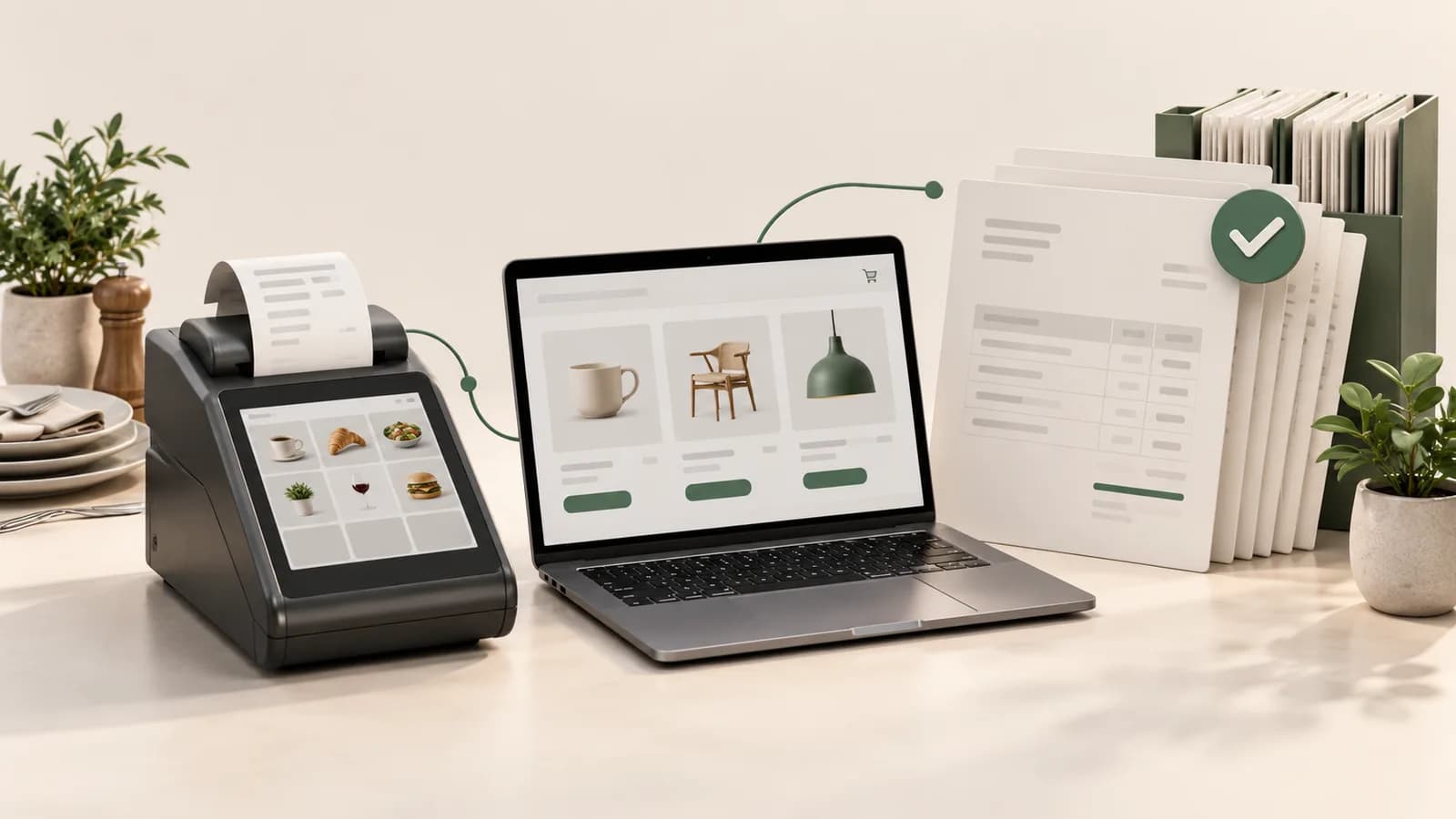
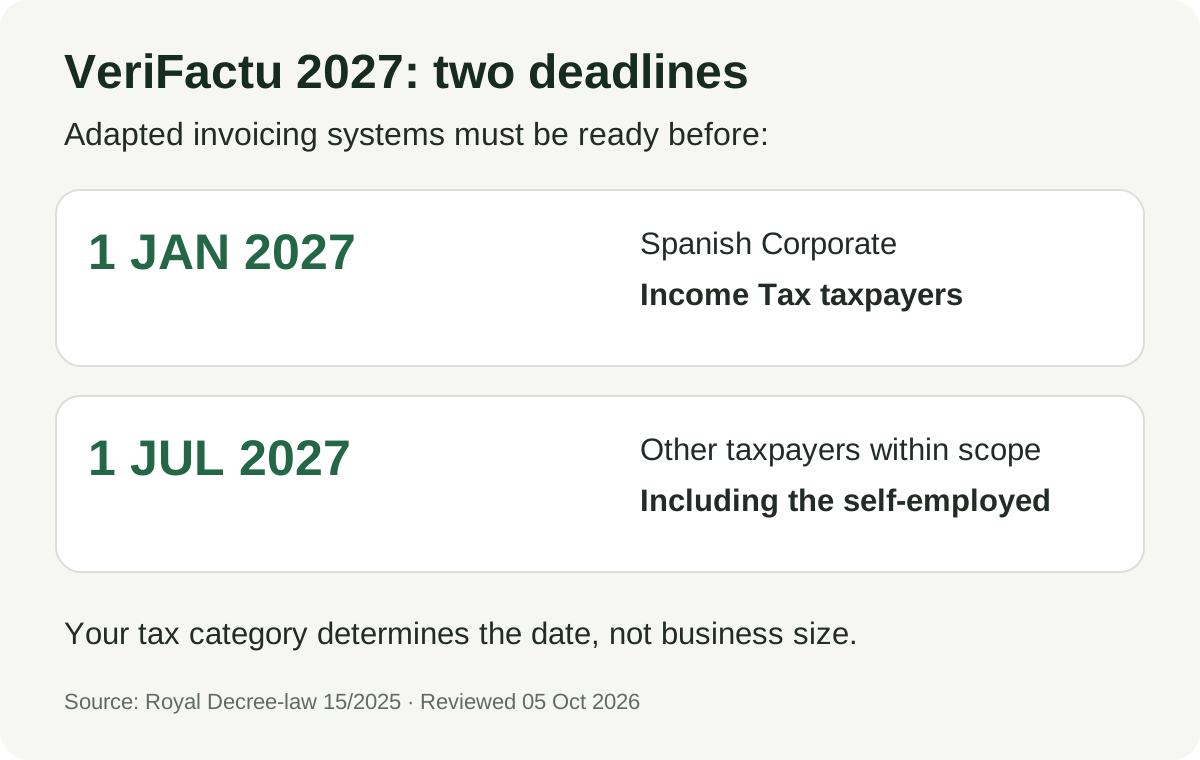
If you run a shop, restaurant or online business in Spain, 2027 matters for your invoicing software. Spanish Corporate Income Tax taxpayers within scope must have adapted systems before 1 January 2027. Other taxpayers within scope, including many self-employed businesses, have until 1 July 2027. Source: Spain’s Royal Decree-law 15/2025.
You do not need to understand every technical detail. You do need to know which system issues your invoices, whether the rules apply to you, and what to check with your provider. These are Spanish rules, not a Europe-wide deadline.
Nexoflux already has its own POS system with VeriFactu: DianDian POS. This guide explains the rules and helps you prepare the questions for a demo of our product.
What VeriFactu means in plain language
A POS, or point-of-sale system, helps you manage sales and payments. A SIF is a computer system that issues invoices. Your POS can also be a SIF if it issues invoices.
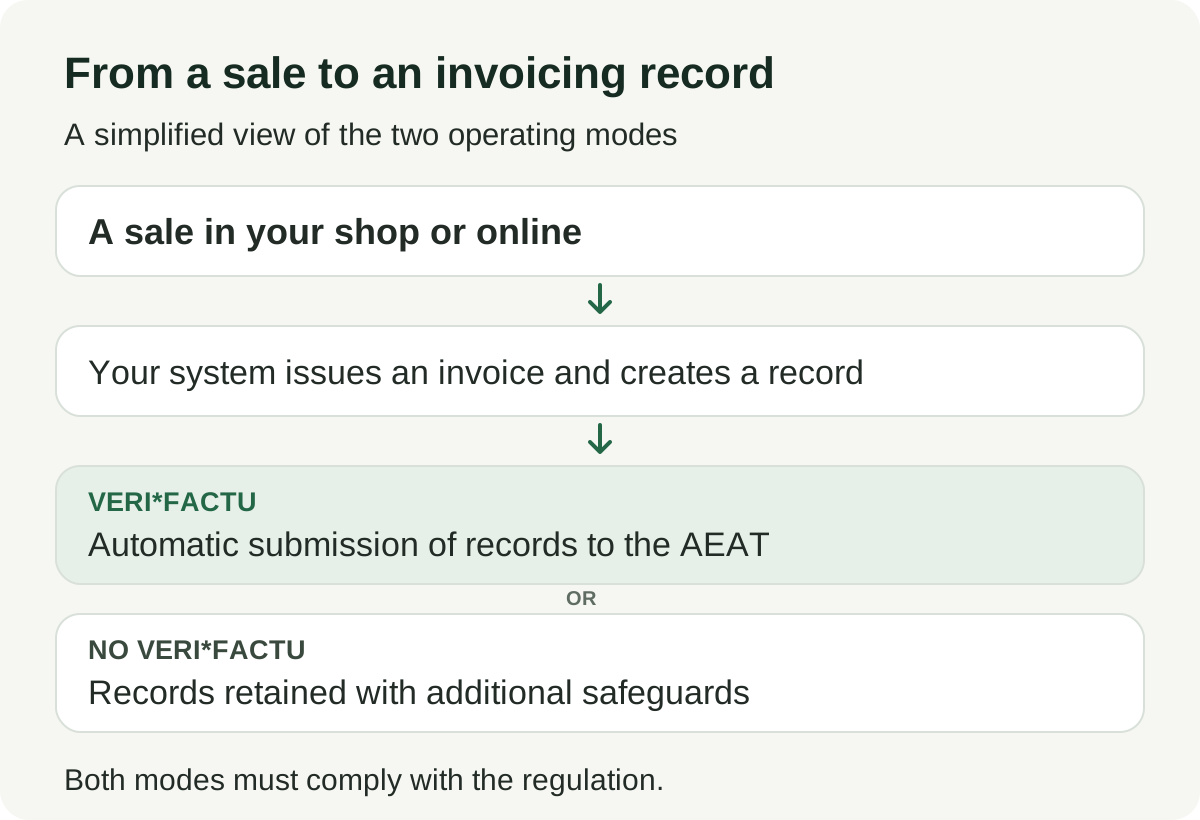
The regulation sets requirements for these systems. VERI*FACTU is the operating mode that automatically sends invoicing records to Spain’s tax agency, the Agencia Estatal de Administración Tributaria (AEAT). A record contains invoice data; it is not the complete invoice PDF. Source: AEAT definitions.
When your system must be ready in 2027
- Before 1 January 2027: Spanish Corporate Income Tax taxpayers within scope.
- Before 1 July 2027: other taxpayers within scope, including self-employed people carrying out business activities.
Your tax category determines the deadline, not company size. A small incorporated business may have the January deadline. Source: BOE adaptation timetable.
Which businesses are affected and what to check
Check your position if software issues your invoices, including a POS that issues simplified invoices, often called receipts. Your industry alone does not determine whether you are included.
Exceptions include taxpayers using SII (Spain’s immediate VAT reporting system), excluded transactions and certain cases involving foral tax rules or an exemption decision. If you are subject to the foral rules of the Basque Country or Navarre, confirm the applicable framework with your tax adviser. Source: AEAT scope.
What your software must do and what you should check
The producer handles the technical requirements. Your role is to choose a suitable system, configure it correctly and follow its operating instructions.
Check these points:
- Protected records. Issued invoice records must not disappear or change without the appropriate new record. AEAT: integrity.
- A traceable sequence. Records are linked using a digital fingerprint, or hash, to help detect changes in their sequence. AEAT: traceability.
- Accessible information. Invoices and records must remain available according to their applicable retention obligations. AEAT: retention.
- The right QR and wording. Affected invoices include the tax QR, or equivalent content where applicable. The VERI*FACTU wording is used for the mode that submits records. AEAT: QR.
- The producer’s declaration. Request the declaration of responsibility for your version. The producer issues it; it is not an AEAT product approval. AEAT: declaration of responsibility.
VERI*FACTU versus NO VERI*FACTU
Complying with the regulation does not require choosing VERI*FACTU. NO VERI*FACTU is another mode, with additional control and retention requirements. Discuss the right option for your operations with your provider. Source: BOE, articles 8, 12, 15 and 16.
Swipe the table sideways to compare both modes.
| What changes? | VERI*FACTU | NO VERI*FACTU |
|---|---|---|
| Sending records | Automatic, ongoing submission to the AEAT. | No ongoing submission; records remain available for inspection. |
| Record integrity | Invoicing records are chained using a hash. | Chained records with additional local safeguards and an event log. |
| Signing records | An electronic signature on each record is not required. | Records require an electronic signature. |
| Invoice QR code | QR/content equivalent as applicable, plus the VERI*FACTU wording. | QR/content equivalent as applicable, without the VERI*FACTU wording. |
| Producer's declaration | Required for the system version. | Required for the system version. |
This comparison is a summary, not the complete technical specification. Sources: record signatures and VERI*FACTU systems.
Simple examples for a shop and an online store
In a shop: you sell an item for €25. Your POS issues a simplified invoice. In VERI*FACTU mode, the system handles submission of the record. Ask to see the document and the submission status during a demo.
When a customer returns an item: do not solve it by deleting the original sale. The correct procedure depends on the situation; a return may require a corrective invoice. Ask your provider to demonstrate the right workflow. Source: AEAT record corrections.
In an online shop: a €60 order may pass through your website, payment gateway and invoicing application. Identify which application issues the invoice and where integration starts. Taking online payments alone does not show that invoicing is adapted.
These examples are illustrative. Nexoflux can demonstrate its POS with VeriFactu and discuss your online store to review your workflow.
Your business preparation checklist
- Confirm whether you are included and your deadline with your tax adviser.
- List every system issuing invoices: POS, website, ERP or another application.
- Identify each provider, software version and operating mode.
- Request the producer’s declaration and operating instructions.
- Test a sale, a return and a correction with the provider.
- Ask what happens when internet access fails and how submissions recover.
- Check data export, access for your accountant and support.
- Train your team and agree a launch date with time to spare.
Use the same checklist when comparing providers. Compare total cost: software, hardware, installation, training and support, rather than the advertised subscription alone.
Frequently asked questions
Is VeriFactu the same as B2B electronic invoicing?
No. These are separate obligations. VeriFactu concerns how invoicing systems operate; B2B electronic invoicing concerns exchanging invoices between businesses. Do not apply one timetable to the other. Source: BOE, RD 1007/2023 preamble.
Do I need to replace my entire POS?
Do not decide based on age alone. Ask whether your software can be adapted and your hardware is compatible. Request a proposal that separates an update, a software change and replacement equipment.
Do I send each record to the tax agency myself?
In VERI*FACTU mode, the system manages submission. If there is an incident, it must manage the required retries. This does not remove your invoicing obligations. Source: AEAT VERI*FACTU systems.
Does Nexoflux have its own POS with VeriFactu?
Yes. Our system is DianDian POS. Explore the Nexoflux POS or request a demo to discuss the setup for your shop or restaurant.
Your next step for the POS
Bring your list of systems and the questions in the checklist. They will help you decide what to prepare before 2027 and compare proposals clearly.
Official sources are linked beside the regulatory explanations. Content checked on 5 October 2026; check the BOE and AEAT for later changes. The official Spanish sources remain the reference for interpreting the rules.
Related Posts
Claude Fable 5 & Mythos 5: Redefining Autonomous AI Agents
Discover how Claude Fable 5 pushes the boundaries of agentic coding, the cost of zero-defect execution, and what it means for B2B automation.
Nexoflux Engineering

How Multi-Agent AI Pipelines Are Revolutionizing Retail Workflows
Discover how Nexoflux designs interconnected AI teams to handle complex ERP and POS operations autonomously, eliminating bottlenecks in B2B retail.
Nexoflux Engineering